Fun Facts
The Zeigarnik effect: why your brain won't let go of what you left unfinished
The unanswered message, the show left on a cliffhanger, the task you started and never finished: all of it haunts you more than what you already closed. It's not a bad memory or baseless anxiety. It's an effect with a proper name, discovered almost a hundred years ago, and it explains much of what spins around in your head.
✍️ Curioso Latino Team📅 October 27, 2026⏱️ 7 min read
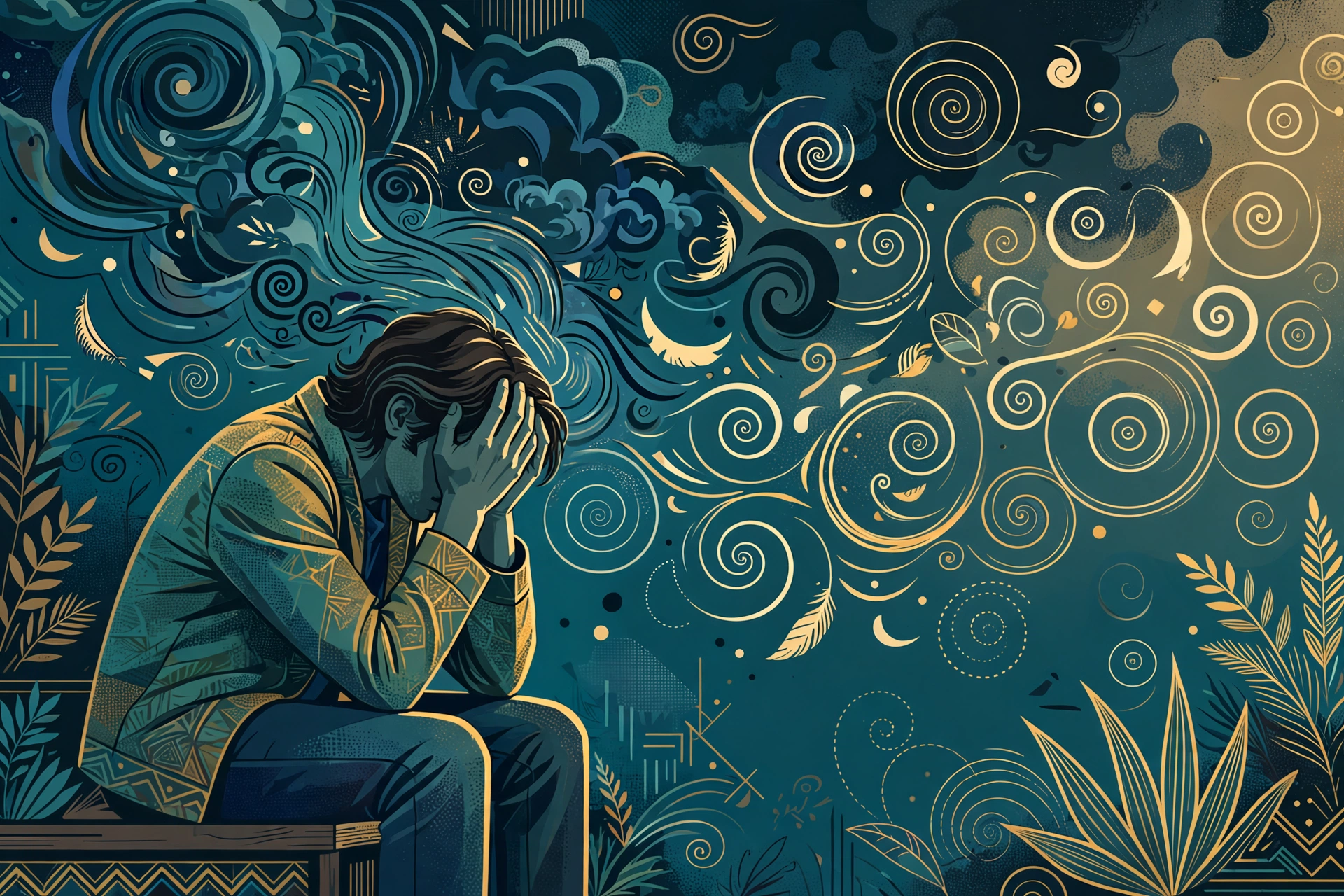
Original Curioso Latino illustration.
As an Amazon Associate I earn from qualifying purchases.
It all began, as the story goes, in a Berlin café. Psychologist Bluma Zeigarnik noticed something curious: waiters remembered the orders of tables that hadn't paid yet with precision, but once the bill was settled, the details vanished completely. As if the mind released what was finished and clung to what was pending.
The 1927 experiment: the unfinished is remembered twice as well
Zeigarnik decided to test it in the lab. In her study, published in 1927 in the journal Psychologische Forschung, participants received about 20 simple tasks —puzzles, sums, crafts— and the experimenter deliberately interrupted half of them before completion. At the end she asked them to recall every task they had done.
The result was surprising: interrupted tasks were remembered roughly twice as well as completed ones. The mind, it seems, holds on more tightly to what was left open. The finding, framed in the Gestalt psychology of her mentor Kurt Lewin, became known as the Zeigarnik effect.
The tension that won't switch off
Lewin's explanation was elegant: starting a task creates a kind of tension in the mind, like a taut string, which only releases when the task is completed. Meanwhile, that tension keeps the content accessible, right at the surface: that's why the unfinished task returns to your head on its own, again and again, without being called.
It's the same mechanism behind season-finale cliffhangers: the story stays open, the tension never releases, and your brain stays there, waiting for the next episode. Streaming platforms know it well, even if they don't call it by its name.
Why the unfinished task haunts you
That mental loop has a cost: every open matter takes up a little of your attention, even when you're not consciously thinking about it. That's why ten small loose ends tire you more than one big finished task. And why procrastination weighs so much: it's not just the undone task, it's the tension of all the open tasks buzzing at once.
But the effect also has a useful side. If something keeps circling, it's not your brain torturing you: it's warning you that there's a loose end. The question isn't how to silence it, but how to close it —or at least tie it up.
The trick that switches it off without finishing: write the next step
Here's the best part: later research, such as Masicampo and Baumeister's 2011 study, showed you don't need to finish the task to release the tension. Just writing a concrete plan for the next step is enough: what you'll do, when, and how. Once the plan is written down, the brain understands the matter is handled and lets go of the string.
Try it tonight with whatever is circling you: instead of going around in circles, write the next action in one sentence. «Tomorrow at 9 I'll send the email with the budget». It's not magic: it's giving your mind the provisional closure it needs to leave you in peace.
How to use it in your favor
First, start tiny: opening the document already creates the tension that will push you to continue, because your brain will want to close what it opened. Second, if you want to come back eagerly to a project, leave it mid-sentence or mid-idea: the Zeigarnik effect will bring you back to it more easily than if you'd stopped at a clean breakpoint.
And third, end the day by writing the next three steps of what's pending. Not to work more, but to rest better: your mind doesn't need everything done, it just needs to know nothing was forgotten.
Your brain isn't torturing you: it's reminding you of what you left open.