Relationships
Orbiting: they stopped talking to you but still watch your stories
It's over, or it never quite began. They don't text or call. But there they are: first viewer of every story, a like now and then, a reaction that leads to no conversation. Social-media psychology has a name for it: orbiting — circling without ever landing.
✍️ Curioso Latino Team📅 October 26, 2026⏱️ 7 min read
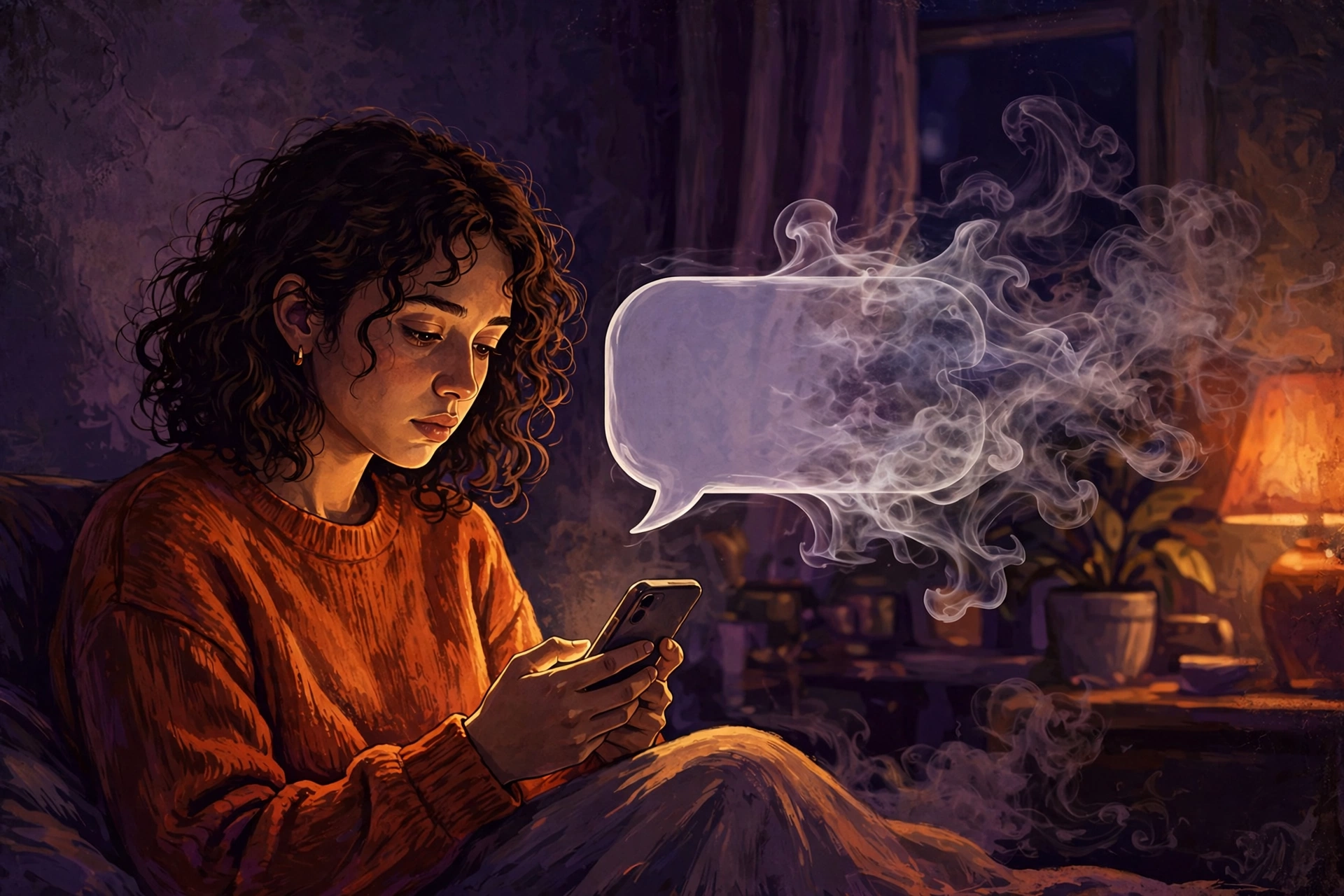
Original Curioso Latino illustration.
As an Amazon Associate I earn from qualifying purchases.
Orbiting hurts more than it looks because it keeps alive a door that never opens. Every story viewed feels like a signal, and every silence after feels like rejection. The truth is simpler and more uncomfortable: watching is free, coming back costs. And you deserve more than a spectator.
Myth 1: if they watch your stories, they want to come back
Watching a story takes a second and commits to nothing: it's curiosity, habit, boredom, or a thumb scrolling on autopilot. Wanting to come back looks different: a message, a call, a plan. If they only watch, they're not coming back: they're orbiting.
Reality: a viewed story is not a statement. At most, it's a 'you still exist on my radar'. Don't build a love story on a 'seen'.
Myth 2: if they watch from another account, they really care
Watching from a second account or after unfollowing you isn't romance: it's surveillance dressed as interest. Sometimes it comes from not knowing how to let go, sometimes from wanting control without showing up. Either way, it's not a conversation.
Reality: real interest shows up face-first. What hides to watch isn't love: it's an orbit worth cutting.
Myth 3: if they react to everything, they're truly interested
A heart, a flame, a 'haha' on your stories are low-cost gestures: they feel like closeness without the risk of a real chat. They're digital crumbs: enough to keep you waiting, not enough to build anything.
Reality: interest is measured in conversations, not reactions. If it never moves from emoji to dialogue, there's no interest: there's presence.
Myth 4: if they orbit you, it's because you're unforgettable (or because you did something wrong)
Neither. The orbit says more about the orbiter than about you: their trouble closing chapters, their need for validation, or their fear of disappearing completely. Turning their behavior into a verdict on your worth is the trap that hurts most.
Reality: you're neither unforgettable nor guilty because of their orbit. You're someone who deserves to be spoken to clearly, not watched from afar.
Myth 5: blocking is overreacting, it's immature
Blocking isn't revenge or drama: it's a boundary. If every viewed story sends you back to waiting, protecting your attention is self-care, not immaturity. Nobody owes anyone permanent access to their life — or to yours.
Reality: muting, unfollowing or blocking are tools, not declarations of war. Use them when the orbit costs you more peace than it gives.
How to leave the orbit
First, stop reading signals: if there's no message, there's no message, no matter how many stories they watch. Second, decide your boundary before the next story: mute, unfollow, block? Third, return your attention to what actually answers back: your plans, your people, your life off-screen.
Leaving the orbit isn't losing someone: it's taking back command of your attention. And attention, in the end, is the most valuable thing you have.
Watching your stories isn't coming back: coming back means writing, calling and showing up.