Relationships
Floodlighting: They Told You Their Whole Life on the First Date, and That Was Not Honesty
Two hours, one coffee, and the full story of their childhood, their traumas and their exes. You left feeling like you had known them forever. Relationship experts have a name for that, and it is not a compliment.
✍️ Curioso Latino Team📅 October 24, 2026⏱️ 7 min read
Original Curioso Latino illustration.
As an Amazon Associate I earn from qualifying purchases.
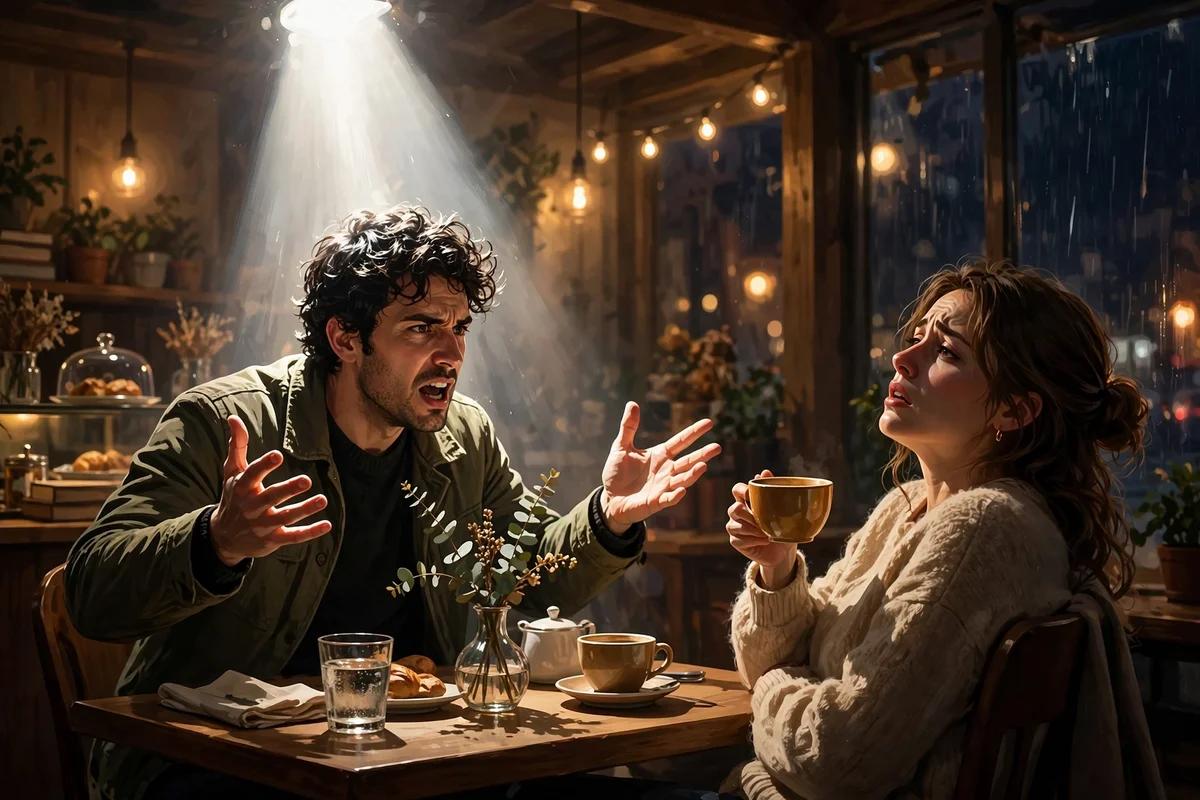
The scene repeats on thousands of first dates: barely seated, the other person opens the floodgates. Their difficult childhood, the breakup that broke them, the conflict with their family, the fear they tell nobody. Two hours later you leave with the strange feeling of having known them forever. It has a name: floodlighting. And according to relationship experts, it is not honesty: it is using vulnerability like a spotlight to speed up an intimacy that does not exist yet.
The story: the date that felt like a therapy session
Valeria (name changed, a typical story from dating forums) went out with a guy she met on an app. Before dessert arrived she already knew he had grown up with an absent father, that his ex had cheated on him twice, and that he had not spoken to his brother in years. «I felt special —she says—. I thought: he is trusting me with the most intimate things». By the third date, he was already talking about moving in together. By the fifth, he was gone. Valeria could not understand it: how could someone so «open» just leave? The answer lies in the difference between vulnerability and floodlighting.
What floodlighting is, according to experts
The term was popularized by relationship creators and experts building on an idea from Brené Brown: real vulnerability is built over time and shared to the extent that trust exists. Floodlighting does the opposite: it drops an avalanche of intimacy all at once, on the first date, to test whether the other person can «handle» those parts, speed up the bond, or secure attention. As Jessica Alderson, co-founder of the app So Syncd, explains, it is «using vulnerability as a high-intensity spotlight». It is not about letting you know them: it is about getting you hooked fast.
Why it feels so real (and why it confuses)
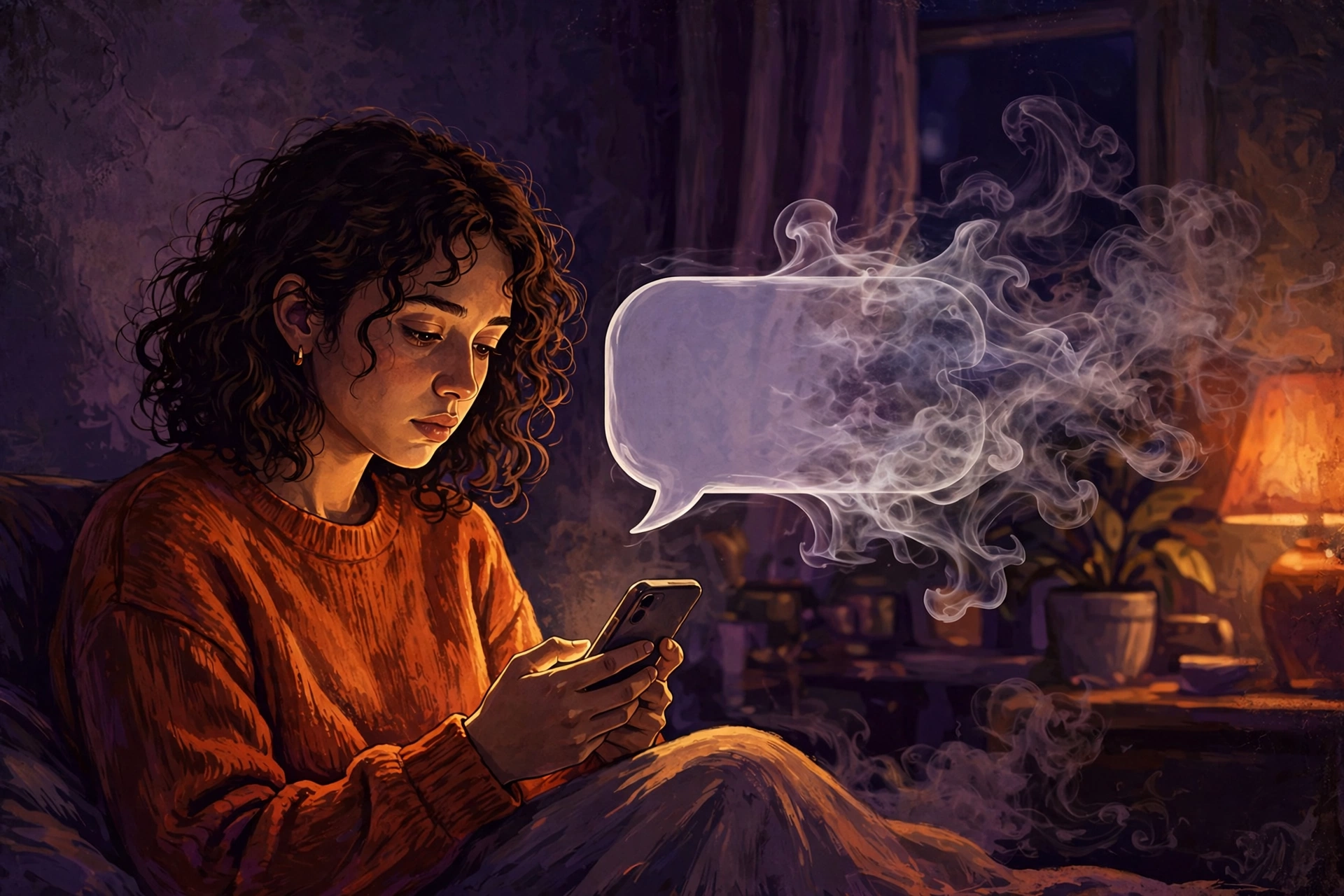
Floodlighting works because our brain confuses intensity with intimacy. When someone trusts us with something painful, we feel the impulse to respond in kind, to care, to stay. It is the same mechanism that makes a shared secret bond two people in minutes. The problem is that this closeness was not earned through shared experiences, but through a monologue. And when the intensity drops —because it always drops— what remains is emptiness: no friendship, no shared history, no real trust to hold up what was promised on the second date.
How to tell it apart from someone who is simply open
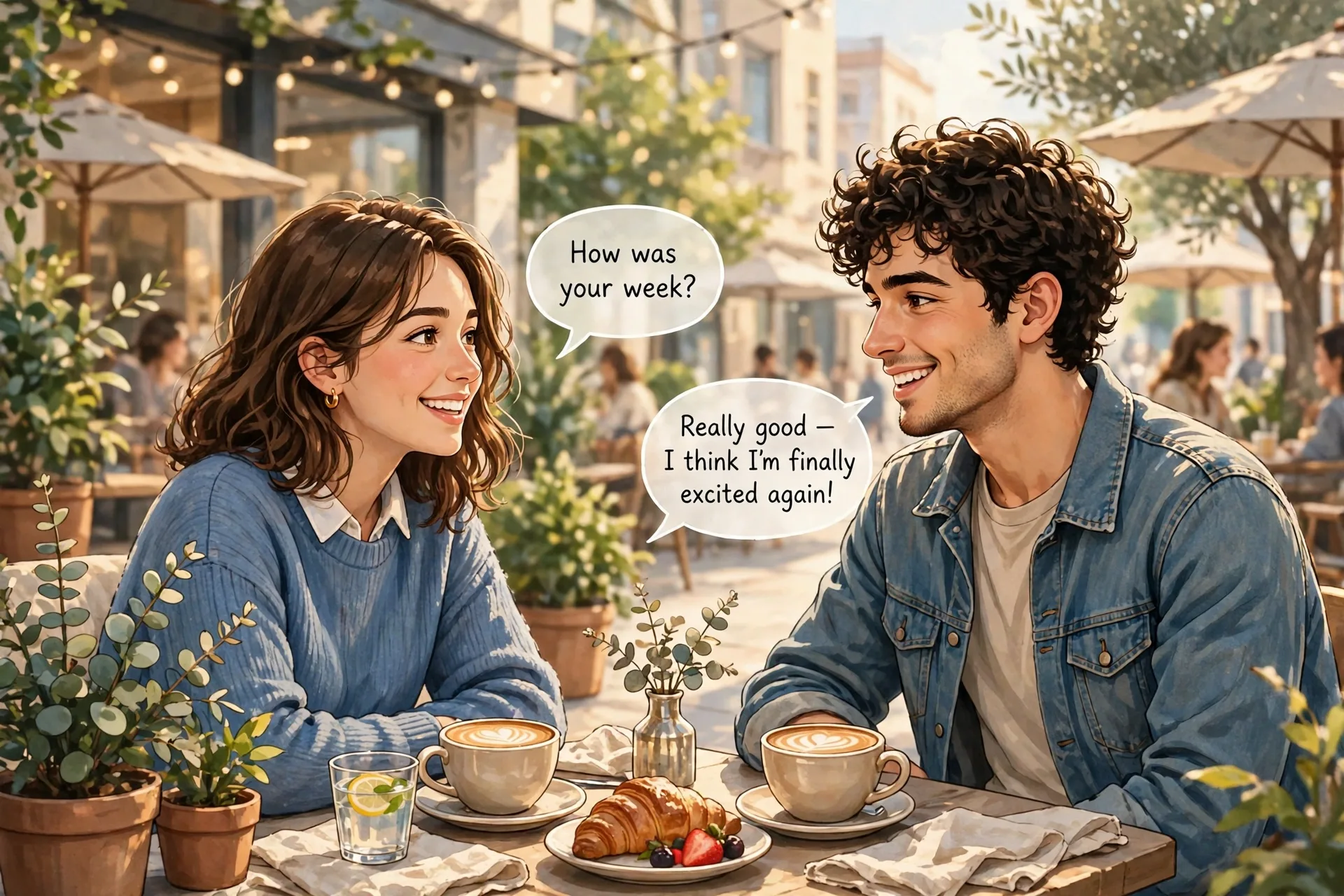
There are open, honest people who share naturally, and not everything deep on a first date is floodlighting. The difference is in the rhythm and the space: an open person also asks, listens and leaves gaps; floodlighting is a torrent with no pauses, where your only role is to hold it. Another sign: the rush. If by the second date there are already future plans, labels and emotional demands, it is not that the connection is «special»: it is that someone is running so they do not have to build it slowly. And one more: if you set a boundary —«I prefer to go slower»— and the answer is guilt or withdrawal, you have your confirmation.
Real vulnerability does not floodlight: it lights up little by little, to the extent that the other person shows they can hold what you tell them. Someone who tells you everything on the first date is not choosing you: they are testing you.