9 Grandma-Approved Kitchen Tricks That Science Confirms
Not superstitions: physics and chemistry disguised as kitchen wisdom. And they really work.
Not superstitions: physics and chemistry disguised as kitchen wisdom. And they really work.
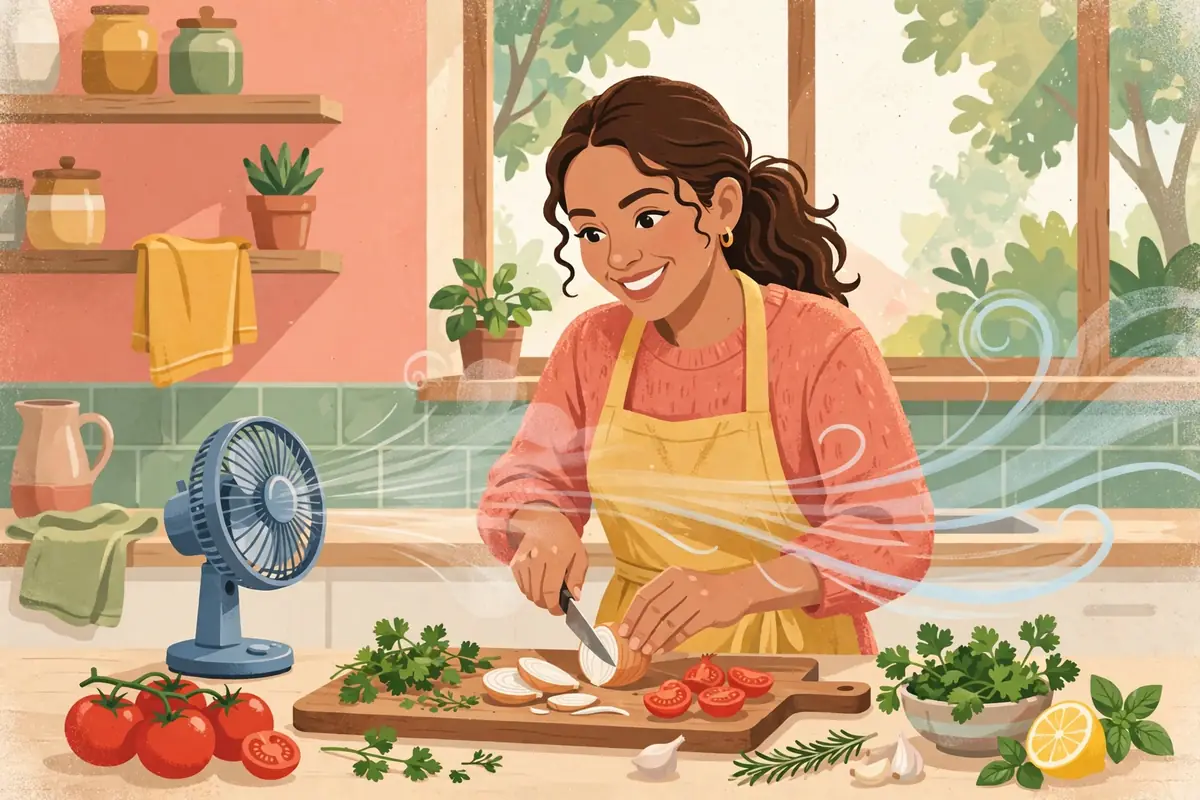
Original Curioso Latino illustration.
Every Latina grandma has an arsenal of tricks that sound like magic: an ice cube in the soup, bread over burnt rice, salt in the coffee. The good news is you don't have to take her word on faith. Science backs them up, one by one.
Fat solidifies in the cold. Run an ice cube over the surface of the broth and the fat clings to it, and you skim it off in seconds. It's the same principle labs use to separate lipids: different melting points.
Onions release a gas (thiopropanal S-oxide) that irritates the eyes. The candle flame — or the breeze from a fan — diverts that gas before it reaches your face. Burn or scatter the irritant: basic chemistry in service of not crying.
Lay a slice of white bread over the rice for a few minutes with the lid on. The bread absorbs some of the burnt volatile compounds. It won't work miracles on charred rice, but it rescues the batch that only went a little too far.
Roll the garlic head with pressure between your palms or inside two bowls. Friction breaks the papery skins without crushing the cloves. Simple mechanics, chef-level result.
Over time, the egg loses moisture through the shell's pores and the air cell grows. More air = more float. An egg that floats upright isn't necessarily "bad," but it's no longer fresh: use it hard-boiled and with moderate confidence.
Salt doesn't sweeten: it blocks. Sodium ions interfere with the bitterness receptors on the tongue, so the coffee tastes rounder without sugar. Taste neuroscience in a pinch.
A damp knife slices onion into julienne and soft cheese with less friction and fewer tears (the juices don't stick to the blade). Water acts as a lubricant between steel and food.
A few drops of lemon in cold water restore turgor to limp leaves: the cells reabsorb water by osmosis and the acid slows oxidation. Fifteen minutes and it looks freshly picked.
Chop cilantro or parsley, pack it into an ice cube tray, cover with olive oil and freeze. The oil shields it from air (preventing freezer burn) and gives you ready portions for the sofrito. Grandma did it in little jars; the freezer just perfected it.
Kitchen wisdom doesn't compete with science: science just gives a name to what grandma already knew.
What we use (or wish we used) to put these tricks into practice.
Big, stable and kind to the edge. The foundation of any decent chop.
View on AmazonReviewed by the Curioso Latino editorial team. Original content for entertainment and general knowledge.